It is Real? A different approach to the future …

Psychopass is an anime set in future Japan where everyone is continuously montired by cameras and other sensors. These sensors take biological readings which are fed into an advanced centralized system called Sybil system. Sybil is responsible for granting every person a psychopass score. If the score gets high enough, the system reports to the police and the target is paralyzed and taken into custody. If the score gets higher, the target is killed. In addition, the system assigns jobs to people , similar to many other fantasy movies and stories out there. Furthermore, everything is almost digital. For example, the cloths they wear are realistic holograms. Their house decorations, scenes, furniture and almost everything are almost not real. The main character, Akane, is a police detective, who is in pursuit of an outlier, someone the system cannot judge. During the pursuit, she discoveres the reality behind the Sybil system, a huge collection of human minds working together and “passing judgment” to the rest of the society making her question her ideals and morals and doubt the current structure of the society.

Such system, established peace and order in the society. However, people became used to such a stable environment of no crimes to the extent that they were was not able to recognize a crime happening in front of their eyes.

In an interesting, a cyborg debates that the term cyborg is somewhat relative. He argues that in the current society people cannot stop relying on technology in their everyday lives and due to their dependance they can relatively be considered cyborgs

The show attempts to show a state of the society when they are deprived of desires, choices and authenticity of life. I can relate that without choices, without real feel of things surrounding us, we as humans would suffer. I am not sure if it would be to the extent that we won’t recognize a crime, but it would suck the emotions out of a lot of activities that we participate in daily. And in my opinion, a single entity passing judgements in real life is extremely difficult to achieve using the current technology. It would take further improvement and a lot of time to consider the possibility of such an outcome.


Image result for psycho pass

Can our memories live on?

If you watched love death and robots, you would understand many new ideas and themes in a wonderful animated series. The episode “Blindspot” tells a story around a dysfunctional gang of cyborg thieves who come together to rob a heavily armoured convoy vehicle.  The suicide mission goes as you’d expect, with a nice little twist at the end where we see the characters die and then one of them only survives. Just before he mourns them he sees them come out of a hologram as their memories were saved beforehand on a drive where they can be re-put to a robot body again.

Imagine if we can save our brains and live on with our personalities beyond death. Nonsense.


Labeling people based on their scores

Imagine a world where we live by doing a job like cycling in order to gain point or scores that is replaced by food. Such a system can be valid in the near future as technology is doing everything for us and the only thing we can do is doing the donkey work.

Brooker puts the carnivorous culture of reality TV on trial in this diabolical hour, set in a world where lower-caste citizens pedal stationary bikes to power their surroundings and earn meager currency. One member of the underclass (Jessica Brown Findlay) strives for more by singing for her life on a live TV special, another (Daniel Kaluuya) bursts onto a broadcast to deliver a screed against his overlords.


People get crazy to be famous or to be the new icon in order to gain points and have more status. Such world will be no place for simple jobs.


What happens after death?

If you ever watched the anime death parade, it shows people after death, they are sent to one of many mysterious bars run by bartenders serving as arbiters. There, they must participate in Death Games with their souls on the line, the results of which reveal what secrets led them to their situation and what their fate will be afterwards, with the arbiters judging if their souls will either be sent for reincarnation or banished into the void. The series follows Decim, the lone bartender of the bar where people who died at the same time are sent to, known as the Quindecim bar, whose role in judging these souls changes when he meets a curious black-haired woman.

It raises the idea of judgement and if it is based solely in good deeds only or can emotions be a variable in judging people. Decim becomes emotionally attached to the black haired woman and she makes him judge people differently based on their background and feelings and why they acted in a certain way based on what they actually feel.


Image result for death parade

The luddites in the modern world

Since the introduction of machines and the industry era, workers and people’s jobs have been replaced by these machines. When the workers knew that they broke the machines and made a mutiny over the factory holders. I thought of the idea and how can it be reproduced in our modern world. Looking into the AI and how technology replaces us nowadays, We can look into google duplex the digital assistant that makes appointments for you and make your life easier. Imagine a world with no secretaries or with no interactions between humans where we make our digital assistants make our calls for us.


A Human Created by Machine!

ِAs far as we know, humans are the main responsible species on the planet that has rapidly change the face of the earth. It all started by discovering fire using hunting tools and ended in conquering lands inventing countless inventions on both civil and cultural aspects. Our capabilities manifested in creating machines and devices that facilitate our lives and amplify our abilities. Many people believe in the power of the mind as the master of the universe that made us able to create intelligent machines and robots. Such intelligent is called artificial because it is a result of our mere inventions; no living thing is involved. Yet, many people envision themselves superior to all other animate and inanimate objects, asserting that we are the cause of these technologies that would not be without us. Nevertheless, is this comparison and claims always hold?


3d printers can guide us through our understanding of the universe. Recently we have become able to create a small prototype of heart using printers. The tissues of the heart were genetically modified and are transformed into ink that can be used in the printer to construct the designed 3d shape, which is a living organ in this case. Such an attempt, even though it is early, is revolutionary because it changes our beliefs about where we usually come from. With the advancement of genetics, we could transplant organs like kidneys, stomachs, and hearts. We also were able to take a small tissue of organs and genetically facilitate its growth to a new organ. All that we did is we either use living cells to create other cells.


What is new in the 3d printer breakthrough is that a machine has become able to create organs that can be implanted in the future into the human body. If this technique were proven to be practical and effective, does it mean that we would be able to simply print organs as we print other 3d shapes? Moreover, hypothetically in the future where robots would be intelligent and independent beings, would a robot create a human using 3d printer and other inventions that would be invented by that time? Consequently, does that support the idea of human superiority or we are just an intelligent species that will eventually lead to a much more intelligent, powerful, and controlling one?

Related image

Sex Robots Are Already Here, But Are They Healthy for Humans?

Are sex robots simply high-end sex toys? Or might they serve a grander therapeutic purpose, helping to channel or curb bad behaviors — rape or pedophilia, for example — that might otherwise be inflicted upon real people?

A pair of British researchers decided to try and answer those questions but faced a big roadblock: A lack of evidence.

“We found a number of health claims were being made, which we analyzed,” explained study co-author Chantal Cox-George. She’s an academic foundation doctor at St. George’s University Hospitals with the NHS Foundation Trust in London. “That sexbots might help safe sex, be therapeutic for people with sex or companionship problems, and might reduce sexual abuse of children.”

But in the end, “we were unable to find any empirical evidence in the medical literature to support or refute any of these,” she said.

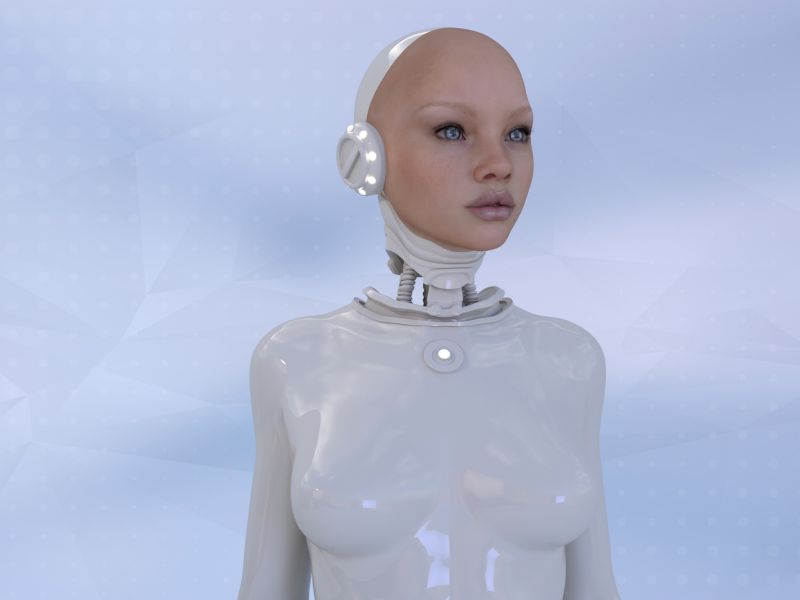
female robot

https://consumer.healthday.com/sexual-health-information-32/sex-health-news-603/sex-robots-are-already-here-but-are-they-healthy-for-humans-734565.html

Lifelike Medical Robot Actually Bleeds

Hal is a medical robot that is used by medical students to learn to diagnose and treat illness before interacting with real patients. It has all of the needed human treats and features like: – crying, bleeding and more. While working with it nurses and medical students actually make human connections with him even when the know that it is not a real human. So, is this operations made on Hal ethical?

Attitudes towards cell phones

Parents’ and teens’ overall assessment of the role of cell phones in their lives

Parents and teens have quite similar overall attitudes about the role of cell phones in their lives, though teens are more likely to salute the upside of constant connectivity and bemoan the downside. 

Perpetual availability breeds safety – or at least safer feelings — and the capacity to reach others anywhere, any time has some social payoffs. Moreover, the cell phone itself can be a “companion” for many teens when they are bored and want to entertain themselves.

Parents and teens have similar views about cell phones

For many cell phone owners, safety is a primary benefit. Fully 98% of parents agree with the statement: “A major reason my child has a cell phone is so we can be in touch no matter where he/she is.” Every African-American parent in our survey whose teenage child has a cell phone agreed with this assertion, as did 98% of white parents and 95% of Hispanic parents.